In the state of Florida, it’s the official end date of hurricane season.
In the Republic of South Florida, it’s an occasion to celebrate.
In the state of Florida, it’s the official end date of hurricane season.
In the Republic of South Florida, it’s an occasion to celebrate.
Listen
with the night falling we are saying thank you
we are stopping on the bridges to bow from the railings
we are running out of the glass rooms
with our mouths full of food to look at the sky
and say thank you
we are standing by the water thanking it
smiling by the windows looking out
in our directions
back from a series of hospitals back from a mugging
after funerals we are saying thank you
after the news of the dead
whether or not we knew them we are saying thank you
over telephones we are saying thank you
in doorways and in the backs of cars and in elevators
remembering wars and the police at the door
and the beatings on stairs we are saying thank you
in the banks we are saying thank you
in the faces of the officials and the rich
and of all who will never change
we go on saying thank you thank you
with the animals dying around us
our lost feelings we are saying thank you
with the forests falling faster than the minutes
of our lives we are saying thank you
with the words going out like cells of a brain
with the cities growing over us
we are saying thank you faster and faster
with nobody listening we are saying thank you
we are saying thank you and waving
dark though it is

taken 2012 w/Panasonic digital & Leica lens -wpm

I recall going to Houston’s Alley Theatre in the early 1980s to see their production of “True West,” a Sam Shepard play. There was free champagne served before the show in the foyer. The slinky girl who I took to the show liked that part.
The low rectangular stage was surrounded by ascending rows of seats. Between acts, the room went pitch dark while the crew changed the set. The slinky girl let loose a small coyote howl, and I firmly elbowed her in the ribs.
The story was about sibling rivalry in suburbia. The bad boy son was perpetrating some neighborhood robberies. He stole everyone’s toaster, it seems.
During one set change in the dark, a dozen or more toasters were fired up. In the audience we could smell toast cooking before the lights came up and action resumed.
The brothers fought and things came to a climax. That’s about all I remember. I liked the uniqueness of the play and admire its author for his many talents and the free-spirited way he lived.

Sam Shepard 1943-2017
Earned by “Colorful Whateverisms,” the lead piece of short fiction in “Parts Department.”
(As they used to say, “This and a dime will get you a cup of coffee.”)
http://www.glimmertrain.com/pages/finalists/2017_03_04_mar_apr_fo_hm.php

El Viejo, somewhere on a precipitous ledge.

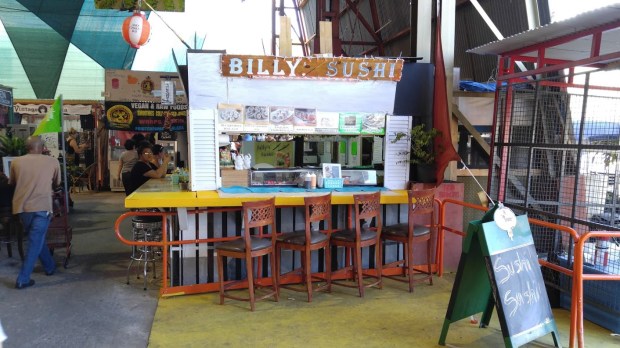
in open-air market, Hollywood FL
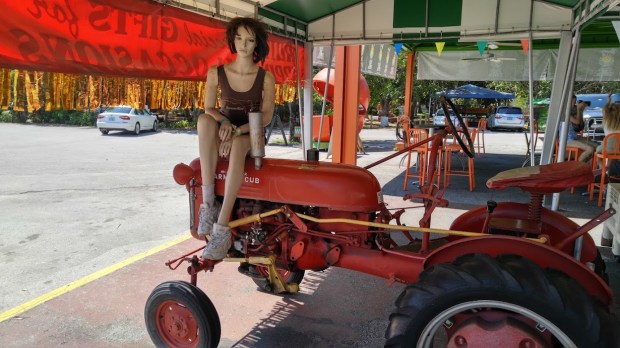
So says the tee shirt of the funky mannequin welcoming customers at entrance to New River Groves, an old-style Florida roadside attraction (with citrus, juices, gator meat and some pretty good key lime pie.)
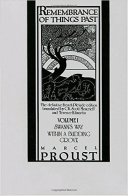
The second novel in the series of seven has plenty of slog areas – tedious sections of rumination and digression. In automotive terms, the dwell angle – the delay between firing points – is immense at times. We pause and deliberate, feeling the delay and the opposing expectation of our own reader habit to keep moving on with the story. I felt a sense of repetition, of being caught in a day-after-day loop. Meanwhile Marcel dishes on the aristocrats and has muted experiences at a beachside hotel in Balbec. The effect, likely intentional, is almost as if I too were staying there, alienated and unhappy over the duration of my visit.
I am not sure we can say this lengthy book is all about seeking young girls in flower or budding romance. It’s more about Marcel’s previous big romantic flop in Paris with his first love Gilberte and his subsequent train & beach trip with grandmama to the Normandy coast. There’s a lot of description about isolation, discomfort, and other complaints. As is the tendency with Proust, we are given golden gifts of insight and wisdom amidst the unhappiness, as if that is the prime circumstance for producing such reflections.
Best early section is the actual train trip to Balbec. Best late section is the last block of a hundred pages that include Marcel’s encounters with Albertine and the “gang.” The last fifty pages are thematically strong (pastries, memory, love, hawthorn leaves). The writing is genius.
At the seaside hotel (which takes up the middle book) the narrative is largely about society – see and be seen. The In-Crowd is often on display at dress-up time in the dining room, a room the narrator depicts as a giant fish tank. Inside they act out their privileged games while everyday folk pass by outside, pause and look in blank wonder through the glass.
Things are not always so stuffy. In the peak of summer, the hotel opens its windows and the guests step in and out on way to the terrace or beach. Marcel does not do the beach. His grandma places him on an upper floor VIP suite lined with glass bookcases that reflect the sunny sea. Marcel dislikes it. He is sickly and cautious.
Eventually some friends (Bloch, Robert, and Charlus) stir him loose. Marcel’s instinctive yearning for romance and sex gets him on the prowl. The object of his affection turns out to be Albertine, who he spots on the boardwalk. We only see her in the last hundred pages or so.
Proust ups the tempo. Things get interesting when our narrator befriends painter Elistir and finally hooks up with the girl he’s been obsessed with, the one from the cadre of girls cruising the beach boulevard. Albertine proves to be outspoken, charming and frank. Her middle-class dialog is a long-awaited breath of fresh air to an otherwise stultifying cast of aristocrats. We get a detailed examination of the games young lovers play, and the turn of Marcel from naive admirer (in the past with Gilberte) to male predator (of Albertine), still holding to childish love fantasies but acting (often not so subtly) with cunning and manipulation. As it develops, she is not that different, just more honest.
 I switched midbook from the newer Penguin translation to the older 1982 Vintage Press volume (the silver and black set by Moncrief and Kilmartin). Larry McMurtry’s use of this older set led me to it. It reads more majestically and to me sounds better tonally. It is not plagued by 21st century colloquials and clipped phrases. The print and typesetting is far easier on the eyes.
The McMurtry formula for reading Proust: ten pages a day for a year equals over 3500 pages, the approximate total length of all seven novels. I read at a slower pace.
Number three is next: the Guermantes novel. Meanwhile, I got a copy of the movie “Time Regained,” which is summary-like and weird, but a nice visual accompaniment. It’s based on the book of the same name, the last novel in the series. Not all parts are understandable at this point. There is a powerful scene of Marcel recalling his memories of Swann’s wife Odette when a certain piano concerto is performed.
*My modest report on the first novel “Swann’s Way” is here.

On sale as Amazon Kindle and Apple iBook $7.99.

2/25/17: Saw her last night in concert at the Parker Playhouse in Ft. Lauderdale, where she and her band Buick 6 rocked the joint with 21 songs. Her lyrics are memorable and vivid. She brings a dash of politics along and is no fan of “liars and fear-mongers,” directed currently to you-know-who. Standing ovations by a largely sixty-ish crowd of 1200, a great show.
She has her own label now and can be more like Dylan, producing records without limitations, like making long double albums in the spirit of Blonde on Blonde.
below from post on 11/16/2012
Folks in my immediate circle thought it odd that I liked Lucinda Williams so much.
She’s so…country, they said.
This was in 1998 when the “Car Wheels on a Gravel Road” album caught my attention.
She is country, I’d answer, but much more.
The “Car Wheels “album is a poetry chapbook. Each piece tries to outdo the other, though they all are cut from the same thematic cloth and connect in the end. Behind excellent guitar work, she lays the Southern Delta twang on thick. The songs are about the chaos of love but they are tidily produced. Some, as it turns out, sound even better in future performances, especially with a minimalized band.
Her songs have pieces that can be transformed and unleashed anew.
Her “Essence” album is raw and sensual. The rock elements of blues and hard surf guitar heavy with reverb foreshadow her later days to come with Buick 6.
I like her albums “Blessed” and “West.” They have their own milieu and style, and she explores worlds beyond her Delta roots. She pushes the envelope stylistically without spinning out of character.
She’s a Dylan figure in the sense that she’s an original, the real deal, ragged edges be damned. Her twang is similar to Bob singing though his nose, and similarly her voice was sweeter and less torn up when she was younger. Both are poets (Lucinda’s father, Miller Williams, is a noted national poet and teacher who read at Clinton’s inauguration). They are individualists who eschew the usual media PR mill. Lucinda’s been down the road and has wisdom to add to all that born talent for writing. Just as you can’t lock Dylan into the folk category, you can’t label her either. They never sing the same song the same way twice. They’re artists and rebels.
In the French Quarter one morning I had breakfast at a beer and eggs dive. Someone put Lucinda on the jukebox, and the universe felt complete.
A younger Lucinda performance from 1989.
No one I’ve heard can do a sad songs about love and loss like Lucinda can.
“Copenhagen,” (audio on YouTube)
I’d recommend anyone trying out Lucinda to try the Fillmore concert double album. It has a good cross-sampling of her work, and the band that is with her that night is both sublime and red hot, perfectly in sync with her. She sings the best ever, her twang toned down, and the guitars complement her. Some fans (and she has her own cult) prefer watching her DVD performances. Lucinda on video is okay by me too, but I find it distracting whenever she refers to a three-ring binder for lyrics. Yet who can expect a poet to remember the volume of their work, word for word?
Better yet, follow her tour and get a ticket to see her live.
 williampelotmoore.com