fiction

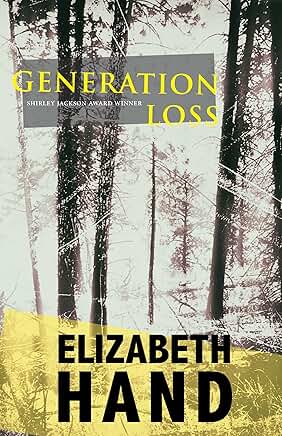
“Generation Loss” by Elizabeth Hand

I went shopping earlier this year for mystery novels narrated from the perspective of a modern, female character. I read in the NYT about this Elizabeth Hand book, which won a notable award, and seemed a likely starter for what I was looking for. I have been long accustomed to the hardboiled accounts from male-centric crime and detective novels by old craftsmen like Chandler, Hammett, MacDonald; and newer ones like Lindsey, Markson, and James Lee Burke, etc. In the aughts, I read two of those amazingly engaging “Girl With ___” novels by Stieg Larsson. When he died, I quit reading mysteries altogether and went back to my usual fare of snobby supposedly literary novels, of which half were remarkable and the other half mostly NYC publisher hype. No wonder I retreated to older tried and true novels.

In this novel, Hand’s heroine is Cass Neary. Cass is not a detective but is reckless and ends up being one. Like Larsson’s first “Tattoo” novel, we follow Neary and root for her. The pages fly by. The rugged coastal Maine setting and cast of characters are intriguing. We are there and feel it. It’s, as they say in CW 101, atmospheric. Of course it doesn’t last, this lyrical writing, because the sellers of mystery/crime books demand storylines explode with ghastly appeal to the most jaded of book readers.

Cass wanders off with the curiosity of a typical Gothic heroine and finds out more than she bargained for, reaching shore on the bad guy’s property on an even more remote island than the bleak, subsistance-level one she had been staying on. Oddly, in a bit of dubious editing, the bad guy’s place is somehow like a self-sufficient Four Seasons Resort, complete with a Chamber of Horrors. It reminded me that Larsson’s first book went off the tracks in a similar way, with a far-fetched B&D dungeon and torture basement making us erase all our nicer memories of fast-lane life in cool Sweden.

Cass Neary is much like Claire DeWitt in Sara Gran’s series (to be posted soon) that also features a lovable punk, down & out, beer-swilling, pill-taking tough-ass grrrl renunciant who gets knocked around to hell and back but still keeps going in order to find the truth and prove a point.

The ghost and soul of the crime/detective genre’s most unforgettable woman character — Lisbeth Salander — remains as Influencer.

.

.

Steinbeck’s “East of Eden”

Published in 1952, this is Steinbeck’s virtuoso performance. Nearly 600 pages of clean, direct prose colored with history, lyrical geographic description, fully rounded characters, and a story that marches ahead toward the fate of two families in California’s Salinas Valley, the Hamiltons and the Trasks.

I came to it looking for an American saga, expecting a novel of broad range over people and time. There is that, but far more. There is a wealth of great reading, along the lines of Tolstoy, DIckens, Hemingway. By Steinbeck’s own admission, the novel is his magnum opus, collecting and utilizing all that he has learned as a writer and applying it to “the big one.”

Of course, with the title and the Cain v. Abel / brother v. brother motiff, paradise lost, etc. There is considerable documentation out there that draws the book’s biblical parallels, especially with the book of Genesis.

Our recent grim and fearful post-election period has been an appropriate time to read about Evil. I reached the end of my read soon after the Inauguration, a queasy time when false pretenders are assuming the reins of power, truth is moving to the shadows again, and actual demons are literally being released.

You’ll spend a lot of time in this book. Sort of like being inside the world of McMurtry’s novel Lonesome Dove, being a close witness type of reader, involved emotionally, staying up late turning pages. Steinbeck relates and spins the story but does not try to razzle-dazzle us with literary pyrotechnics. There are academic debates about who the scarcely-mentioned “I” voice could be. I go with the one that says it’s Steinbeck himself, posing as one of Hamilton’s grandchildren. He extends the fun a little and has the Steinbeck house and family appear in a late chapter. Cameo stuff, based on fact. No matter. Just read, knowing that essentially the story is presented in third person POV all the way through.

Adam Trask is the good-hearted character who cannot quite attain a successful place in life. He is demoralized and cursed by his past affection for Cathy Ames, possibly the most vicious and nasty woman to ever appear in a modern classic American novel. Their offspring (or, as we later learn, from she and Adam’s brother) are the young twins Aron and Cal, who will carry the saga forward into the century.

The wise Chinaman Lee is almost too good a character, and for my money steals the show. He exceeds Sam Hamilton in his ability to shoot the shit, i.e. talk to any topic, and he does so with eloquence. He shows even more intelligence, compassion, and duty than Sam or his wife Liza combined. He is the saving grace of the twins. His major role however is philosophic. His deep studies and knowledge of the bible and beliefs both Oriental and Occidental, allow him to give us the novel’s key message: timshel, Hebrew for “thou mayest,” which moves us out from under the imperative of “thou shalt.” So, we have a choice about Evil.

And somehow that choice about Evil brings us back to election-time again.

Reading Tom Gold Weathers, Jr.

Most likely, Tom would not believe it: my recent reading binge of his indie-published books.

I’ve read them now, but for a while I had yet to finish a journey through several of his paperbacks. Some I read were were small storybooks or collections of verse (those items he called “poem things”). There were also essay-like ruminations, and engaging articles observing people around him. I read all of these and for good measure re-visited a favored older book or two.

Many of us called him “Stob” back in the 1970s because he once worked part-time staking out house foundations, literally hammering stobs into the ground. He compared it to structuring written pieces.

Tom Weathers has an author persona that straddles the line between a Southern gentleman writer of intelligence and refinement and a Waffle House good ole boy scribbler. He can pull the mix off. His writing is congenial and well-constructed, wide in its readability appeal.

Tom’s published ventures are in sum his crónicas. His reports of life as he sees it, come from vantage points often located in Shelby, NC or Gastonia, NC. Most accounts are humble and honest, almost none are showy. He also produced a wealth of travelog writing and photos based on his roadtrips throughout America and Canada in his pal Conservative Bob’s BMW Roadster.

With Weathers in general, here are a few things you get:  inside accounts of close family events, astute profiles of friends and work peers, clever cosmic realizations, tales of his uphill veneration and loss of certain women very dear to him, the odd twists of fate and Vonnegut-like moments of karass, or as we called it, intertwingle, where lives magically cross other lives. e.g., Who among us but Tom would have someone like a tanned post-pubescent George Hamilton drift in and out of his personal history chapters?

I stumble over the riffs about physics and engineering that are beyond my grasp. It’s in Tom’s DNA. Once when we traveled together on an Amtrak to NYC, he talked about the theory of relativity as our train ran next to another train going in the opposite direction.

He is an admirer of Faulkner as well as Castaneda and Hemingway. His writing is often understated, and he withholds content that could be considered “unseemly.” Part of doing so is brought by the caution of being un viejo wary of being too brash.

Tom’s writing has always put me in the spirit to write a little bit myself. After all, he was my editor and supervisor in my first writing job out of college. His stuff has always influenced the way I write.

I’d tell him that. It’s praise. In previous times, hearing it would please him. But for now he’s conspicuous in his absence. O Lost, and by the wind grieved…Stob.