Joy Williams: “The Visiting Privilege”

joy(updated October 20, 2019)

It’s a big collection of her stories, old and new. When I first wrote this book report, I’d checked out the book from the library. This time, after reading a recent New Yorker that featured a new Joy Williams story, I bought the book.

As I wrote previously: How did I miss out on her all this time?  Who do I read that does short stories any better?

Williams can place characters inside a crucible in a story without us even noticing. Often the situations are odd and disturbing. Morals are stripped bare for examination. Sometimes there’s a whiff of Flannery O’Connor in the air. The stories also include many animals, who are equally random and resident on earth.

As I go down the Contents list, adding checkmarks by the ones I read, I find that each story reveals her mastery of the form. Each has its own set of themes, mysteries, and nuance. Unlike many of today’s hailed and awarded stories that are too often cleverly phrased throwaways, Joy Williams’ collected stories are solid and invite being re-visited.

Her writing is a reflection of our privilege to be cogent, alive visitors on Earth. Her book allows us the privilege to share in her observations, many of which are poetic and visionary. Her work should reside permanently in the study books for classes of American Literature: Modern Short Story.

“Signs Preceding the End of the World” by Yuri Herrera

It is sort of a puzzle and also a lyrical piece. In the sense of world statement, it’s a dark, futuristic view of an immigration apocalypse.

Unlike a lot of fiction here in the American Age of Super Realism, it does not make things so abundantly clear and  in your face. Instead the story coaxes the reader and invites involvement, as a poem does.

The main character is a brave woman named Makina, who is sent to carry an underworld package in exchange for finding her brother.  She is brave and lusty and intuitive and at the same time green and naive for never having traveled.

“When she reached the top of the saddle between the two mountains it began to snow. Makina had never seen snow before and the first thing that struck her as she stopped to watch the weightless crystals raining down was that something was burning.”

The tightly written novella describes her journey into the land of Anglos and how alien the world appears to her. She has trepidatious episodes, and in the end we are left to figure what has exactly happened to her.  No place names are used, which makes the reading minimal and fresh.

PS- update: my latest take on the Spanish word “verse” as used in the book is “to be seen” or a reflexive verb using se, as in “to see oneself.”  Call it an educated guess.

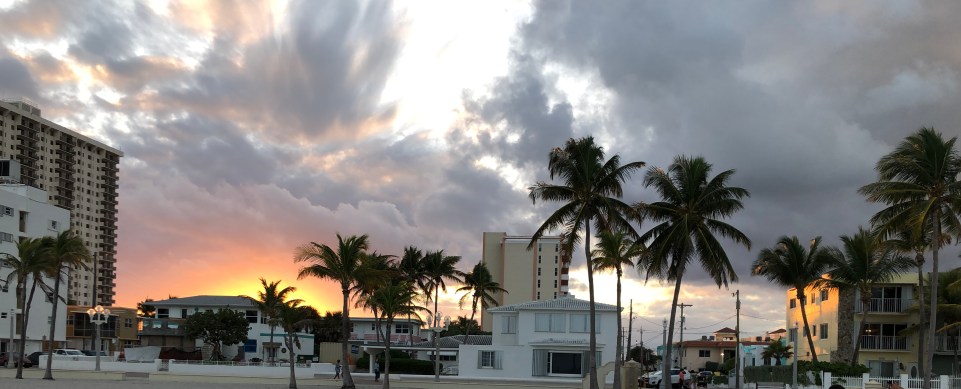
Books, Photos, Etc: Spring in FL 2019


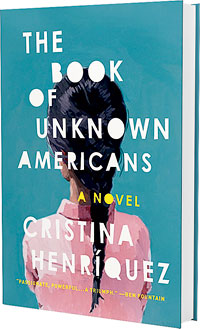
“The Book of Unknown Americans” by Cristina Henriquez

A simple, well-written, and passionate story about Central and South American immigrants adjusting to a new life in the USA. The family characters are vivid and likeable, and the conditions and human dramas in their new less-than-desirable home in Wilmington, Delaware make it a page-turner.  There is fiery romance and pending tragedy between Maribel and Mayor, which is the heart of the book. There is a lot to be learned here by gringo readers.

th   “Waveland” by Frederick Barthelme

Down and out, a book of three or four people still hanging in there in coastal Mississippi after Hurricane Katrina. Being mean, being sweet, being survivors.  It’s Vaughn the architect’s story, simple yet complex (owing to his constant soulful introspection). Once again, like in his classic novel “Tracer,” we see a man who is separated and dashing proceed in his everyday life with a new girlfriend, who somehow/someway is tolerant of Vaughn’s getting back together with his ex-wife. All three end up in one house at one time, in a Tennessee Williams sort of crucible, making for a survival of a different kind. I didn’t like the three characters that much to fall in love with the book, and the dynamics came across like something I’d already read  before.  Still, I remain a big Rick Barthelme fan. Not many out there are writing from their heart and soul about everyday American men. He does it with truth, fairness, and guts.

“The Invisible Man” by Ralph Ellison

I’ve been trying to read this book for years and in March made it farther than I have before, which is still less than 25% in. Ellison’s writing is true to the times, in the sense that it’s wordy, strident with complaint, indulgent in artsy be-bop, and filled with tangents, a style largely unagreeable to today’s more impatient “give it to me stoic and straight” readers. I wondered early about the influence of marijuana in the author’s self-edits.  Who can contest decades of critics and readers who have proclaimed this a great novel? It assuredly is, but it’s one I cant seem to settle into and press relentlessly ahead in the pages. I wish I could appreciate it for all its worth, and eventually will try again.

PHOTO SECTION

Pensive, decades after College Spring-Breaks of Yore.

Houston Nightspots 1980-1986

Over the years, I’ve had a lot of traffic coming to read my article called “A Look Back at Gilley’s 1980.”

Here are some of the other bars I remember from the early 80s in Houston. Those were great days. If you were there, you’ll recall some of them. Though quite a few I can’t remember their names, so help if you like.

Contributions about the history of nightspots during this time are welcome. Send to   -> wpmfla at gmail.

Todd’s – Richmond Avenue area. Had the feel of a neighborhood bar, usually a good crowd, polite, well-to-do, and above all looking for love. Todds was one of the best meet markets on the Southwest Side. The dancing was full throttle by 5 pm. For the less energetic, there was backgammon.

Shanghai Red’s – Red-hot happy hour with dancing and a free buffet, all with a great view right on the Ship Channel. Disadvantaged locals ate for free and left, like a community service.

San Antone Rose – Cold longnecks, mixed crowd with C/W and Top 40, a little for everyone. On San Felipe, West Side. The Rose had a free happy hour buffet too. Their tamales were delicious, but you tasted them for three days.

Cowboys – A crowded sort of upscale C/W bar. I think it was on Westheimer or Richmond, out west. I was there when a fight broke out. A friend of mine got clobbered.

Spats – A high-end bar and dance place in an office plaza near the Galleria. You had to know where it was. Beautiful people, heavy druggy amorous glamorous and booze-soaked. A paragon of disco’s.

Confetti’s – a very loud dancing place. Somewhere on the SW side. It’s a blur.

Munchies – an artsy ice-house on Bissonett near Rice with string quartet music and mimes. There was another great ice-house closer to Bellaire but I can’t recall its name.

Yesterday Once More – best I remember it was located in South Houston. Lots of line dancing in an atmosphere of mostly Carpenter tunes ranging from the romantic to the morose. The place had a separate “Mood Room” with glass partitions and couches.

Chaucer’s – an Arts Museum area bar on Bissonett and Montrose in the basement of the old Plaza Hotel. My favorite after-work hangout. I was fond of Vivian the bartender. She’d have a Johnny Walker Black and water ready before I got down the stairs.

Marfreless – in River Oaks, an unmarked and eclectic bar for couples. Superb ambience, great mixologists behind the bar. Marf’s had sofas and curtained nooks, a great place for lovers.

Sillouhette Lounge – a cozy neighborhood nudie club on the unfashionable side of Bellaire Blvd.  Friendly, non-threatening. They don’t make ’em like that anymore.

Rockefellers – in the Heights, an old bank turned into a mini concert hall with big name shows and retro nightclub tables. I went on invitation from friends who were gay.  Those guys were always tuned in to the trendier places in town.

Cooters – I think that was the name, anyway. A large dance club and saloon on the opposite end of the shopping plaza from Todd’s, on Richmond Avenue.  Had the reputation of over-served customers. Some of the baseball Astros drank there. Some of the visiting rival Mets were arrested there.

Shamrock Hilton – The hottest place in town on March 17th. Great ballroom drunken mix. Lots of random kissing. One eventually learned to book a room far in advance.
“Guermantes Way” – Proust

9789176053393_200In 2016, after stalling out in Chapter 1 of novel 3 (of In Search of Lost Times), I came back to re-visit and am getting into it again.  I’ll need to go back and re-read that first chapter. Sometime.
But for now, I started where my bookmark was, and that’s Chapter 2. Young man Marcel is now out on his own in Paris, mostly in pursuit of young women. He has enough status and station to arrange to see women by formal letter and then sends for a carriage to bring them to his room. Or in Albertine’s case, he’s around when she pops in unexpectedly. The liaisons are described in slow, tedious actions. We are to assume that Marcel is still green and tentative.  His romantic interactions with Albertine (the boisterous girl from Balbec in beachy novel 2), despite the eloquence of his accounts, seem childish. While she is frank and forthcoming, he lacks the confidence and candor to be an effective lover.

We see a repeating syndrome. Marcel has a thing for an older female aristocrat, as he did as a boy with Swann’s wife the courtesan Odette (and later her daughter Gilberte too). This time his object of desire is the Duchess Guermantes, who as depicted, is a powerful and beautiful woman who could drink a man’s blood like wine. She is separating from her husband and at long last returns some attention to the once-adoring Marcel. He now, and this may change in later pages,  apparently has other conquests on his mind. His numb reactions to her invitations are pitiful and cringe-worthy.  He doesn’t seem to have his values in order. Hovering around him as a reminder of his impetuous behavior is the omnipresent moral enforcer the housekeeper Francoise.  As yet, I am not understanding his friendships with pals Bloch, Robert, and Charlus.

Stay tuned for more of this report.  Novel 4, Cities of the Plain, is under the same book cover. That should be fun,  Only a few hundred more pages to go.

“Lake Success” by Gary Shteyngart


At the turning point in his journey of misery and discovery, protagonist Barry Cohen daydreams of Lake Success, NY. It’s like looking for a rope when drowning. A Manhattan mega-capitalist who has spun out of the fast lane, he imagines it’s a safe landing spot, a more peaceful suburban life, replete with healthy sons and matching sinks and domestic bliss. Lake Success is a place of zero madness, he seems to believe, a nostalgic town of anonymity and normalcy.  It is perhaps no ironic accident on the author’s part that this real town was once the location of the United Nations HQ (the book is an international POC extravaganza, most of whom get along) and Sperry-Rand’s gyroscope engineering center (stability, anyone?)

“Lake Success” is an intelligent, piercing, and often humorous look at the Manhattan rich and the American not-so-rich and all the woes befallen to both. It’s set in 2016, the advent of the surprising and, to many, nauseating era of Donald Trump.

We get the added benefit of Shteyngart’s’s ability to write travelog, as he takes his main character by bus from NYC to Richmond to Atlanta to El Paso-Juarez (the author nails the fear of the place perfectly), and at last to San Diego to see his father’s grave.

For all the trouble Barry Cohen creates for himself, he comes out at the end, escaping ignominy and insolvency (he has 35 million left). He re-gathers accomplices in the land of ruthless hedge-fund players and goes on with his life, now single. It couldn’t be any other way. He is an unlikeable character from the start, and often his failures are well deserved. Only his magnetic charm and deep pockets save the day.

He does have a certain Holden Caulfield innocence once away from the trappings of Wall Street, and for this we can say he’s a likable jerk. He loves kids and passionately tries to change the lives of two of them. He dislikes phoniness, begins to realize the danger of designing women. He seeks the heart of the world, stripped down and pitiful, having run away from The Top – and at considerable risk to family and self. Sometimes we worry more about his black Mastercard or his prized watch collection.

It can get ugly.  Barry huffs crack and gets pathetically physical with a man behind a bus station. On another occasion he hooks up with a beautiful black girl seated next to him on the bus. After they have sex in a hotel room, Barry thinks she has stolen his things (she actually put them in the room safe). Both events are gratuitous and kind of creepy. Characters eat each other in this book like cannibals, capitalist ones.

In the Big Ending, we are preconditioned to feel warm and take out our hankies over his autistic son’s dramatic bar mitzvah. It’s difficult to feel much empathy or joy, considering the place of wealth and privilege Barry rented out so the kid can become a man.  Yet one concludes this too is consistent with the story.  Money is what he ultimately knows. Barry Cohen is, after all, still a  very rich asshole who can buy and settle for another kind of “Success.”

Lucia Berlin

luica berlinThis is a collection of short stories I was led to by a comment from Thomas McGuane on NewYorker.com, who names her as his favorite short story writer. I’d never heard of her (she is gone now, 1936- 2004). I wonder again, as with Joy Williams, how I ever missed her stories.

She was writing back in the Sixties and is a child of the Sixties and the Seventies and Eighties as well. She was a visionary, writing into the early 21st century, who never compromised her simple and realistic phrasing and eye for character detail.

Her picaresque life took her all over the world, though most of her sensibilities are primarily Southwest USA with a tablespoon of Mexico and Chile. She flew under the radar until finally getting published in national magazines. She was a sensation and a confirmation of what could be called honest art. In her lifetime, her reputation soared only among those in the know. So it’s good to see her books re-released so all readers can enjoy, as I have, the amazement of discovering terrific, unsung writers of our time.