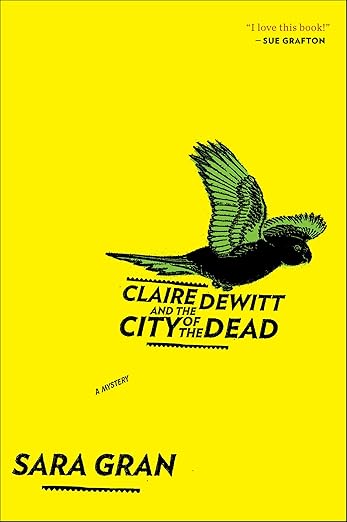
A creative memoir in small paperback format.
Available from Amazon and other book retailers.
In these vignettes and short stories of Americana, there’s a fair share of leggy girls who like to go bee-bopping with an older teacher-type dude who often writes in second person present You. These inquisitive girls from the Mississippi Gulf Coast climb into Your car and ride You around even if You’re driving.
The law of averages says You’ll have marvelous fun with some of them, and some will leave You flat or puzzled.
And for readers, I think that holds true for this collection of stories too.
I don’t know how old these pieces are. His fine novel “Tracer” (also reported on, as well as “Elroy Nights”) still reverberates in my brain and I don’t see the others in the same sort of admiring light. I read this story collection as an historical perspective, like stuff developed en route to where the author is now, and maybe that was wrong on my part.
I’m one of those readers who groans at first when reading a piece either in present tense and/or in “You” voice. It’s so precious and like 2003-workshoppish. At least Barthelme, an old pro, can carry it off with skill and dignity. Few can. We’ve moved on, though – right?
July 15, 2013
As advertised, we’ve got multiple voices going on. So far in Part One, there are three: a young narrator from the sugarcane family (the Stites), an exotic dancer named Rachel K, and a tomboy daughter of the nickel mine family (the Lederers). The only writing in third person is the Rachel K part. The Stites narrative is mature and eloquent, and the Lederer narrative is puerile.
Amidst the Americanos at work in their bubble communities in segregated areas of late 50s, early 1960s Cuba, the reek of colonialism and privilege is strong in the air. The capitalist families have a pecking order of maids and chauffeurs. The children have typical bourgeois expectations of security and material things. Except for one of the Stites’ sons, who has gone to the other side. Out in the fields, the hard work of cutting cane is handled by Jamaicans, who along with boatloads of imported Haitians, do the dirty work.
Meanwhile, revolution is advancing in the hills of Cuba. Guerrilla fighters are burning the cane fields and raising hell with capitalism. The imported Americano families are reluctantly freaking out, and the country’s military generals are in denial. The very real Raúl and Fidel Castro are around, as are President Prio and the returning scoundrel Fulgencio Batista, plus cameo mentions of historical American figures like Henry Cabot Lodge.
Kushner, part Cuban-American, built this book on her maternal family’s history plus lots of research and her own vivid imagination as a novelist. She is painting the picture for us in bits and pieces, weaving in facts and keeping up dramatic narratives. So far, her imagery is not as luxuriant as it is in Flame Throwers. But in this novel, she’s a much more interesting storyteller. Parts of the narrative jump in time and between characters, but overall the story pushes forward in a fluid and logical direction. The impacts are less strident, subtler than in Flame Throwers.
Readers are getting a central image from the very start, based on color. The green fields of Cuba are quickly turning red.
July 24, 2013
The cast builds as the eponymous Havana character, dancer-courtesan Rachel K, finds a man of interest, a French political fink. Meanwhile, back on the other end of Cuba, around Nicaro and Preston, more American families and their children are coming into the corporate jungle. The air is rust-colored and foul with the dust of nickel ore. The Allains are countrified and Joad-like, sticking to themselves on a self-sufficient lot next to the factory. The noveaux riche-minded Carringtons and the structured, upper management type Lederers try to live like they are back in the U.S. but they aren’t.
Part One leaves us with the ugly image of a monkey raging inside its cage, in contrast to the one the Lederer girl fabricated as her pet in Cuba and bragged about to her stateside friends.
Part Two opens with a sensational Kushner chapter depicting a dinner party for the managers and the ambassador, held at a dilapidated lodge along a humid river. The American couples drink heavily, especially Mrs Carrington who is an accident waiting to happen. Suffering in the heat, trying to make a social scene out of a rustic get-together, the only ones to keep their cool are Mrs. Mackey and perhaps the ambassador himself, who couldn’t care less that the food is bad or the lodge is a dump. The corporate wives put on quite a show and dominate the extended scene the author has put together for us. (She will do a similar long dinner party scene in The Flame Throwers, see my review). Once again Kushner presents us with an indelible image:
“The Cuban women draped their furs down around their lower backs. Perspiration beaded on their upper lips, caking their makeup and giving their décolleté a particular, reflectant glow. They looked to Tip Carrington as delicious as bowls of ice cream beginning to melt. Something you better lap up quickly, before it puddles.”
Local violence as represented by a cockfight is simmering in the realities of culture warfare. The new character Willy, a local Haitian overachiever, seems the only one with his act together. In the club where she dances, Rachel K is waist-deep in the insurgency, and as Part Two closes, her friend La Maziere predicts a possible violent end to her life.
July 31-Aug 1, 2013
Seeing Hemingway in the novel’s cast of characters, downing daiquiris at La Floridita bar, wasn’t a surprise. He of course was The celebrity resident in Cuba during the Batista/Castro transition (not long before his departure and eventual suicide in Idaho). The portrayal of the old guy produces mixed reactions. Is the dialog rooted in any sort of hearsay or is it completely made up? Are we to assume that Papa is brainless at this point, jabbering about la pachanga and asking men to dance? Is that an insult, that last one? Or a commentary on how Papa suspects Cubans and their visiting elite are getting soft? It happens twice, from two narrative viewpoints. I’m not convinced Kushner made a great value add to the story. The depiction of E.H. can be viewed as colorful and comic, or emblematic of the country’s divided sense of values, or as a mini-slam of his writing (“lots of humping and I’s”) – a gratuitous swipe at his legend. Maybe it’s something even deeper in Kushner’s layered scheme, like many things in this book. Take your pick.
Risk-taking is a trait of the novelist, and we get another injection of celebrity-related history with the appearance of Desi Arnaz’ niece, who is a robust young teenage girl who puts the hormone hustle on the Stites boy. He is overpowered by her standing there, swimsuit at her ankles, and can’t close the deal. Gratuitous maybe, but another memorably written vignette in the large canvas of Part 3, which includes entertaining and scandal-ridden events, as well as politically earth-shaking ones. Who ever said the middle parts of a book have to be dull? Kushner is on her game on every single page.
Now Fidel’s rebels are coming out big time, trick or treat. The guerrillas send rats into the cane field with their tails tied with kerosene-soaked torches. Planes drop ping pong ball bombs loaded with phosphor. Other rebels appear in Nipe Bay with their slung carbines to greet the corporate Americans and take hostages. At the rebel camp in the mountains, we follow La Maziere who gets a cringe-worthy nighttime napsack visit by a most unexpected guest (which made me think of Roberto Jordan and Maria, wishing for that old Hemingway romantic innocence in portraying warfare camps). The older Stites boy, Del, is now a leftist Comandante filled with tactical ideas, and is eager to show his own family who’s boss. An interesting aspect Kushner gives us (obviously she did a lot of research) is how revolutionaries handle such a personal situation, how they can cleverly divert attention from the obvious expectation and get their point across in another, unexpected way.
Cuba’s Rural Guard appears to be impotent against the revolution, sort of unexpectedly stunned like young KC Stites with the naked Arnaz girl. Denial persists among the Americans, who continue to party and call the revolutionary activities a passing thing. But as the terrorism escalates, and Batista is duped into bombing Nicaro, the Americans’ fears are growing. We know the inevitable attempt to flee is coming.
At this point in the book Kushner’s multiple narrative POVs are merging, overlapping, and effectively harmonizing. It’s a beautiful exhibit of writing skill that extends until the end.
The cover is hideous and does no favors to the good fiction writing inside.
Paco Taibo has a natural flair for conciseness and a Hunter Thompson sort of edginess to his observations. His storyline takes place along the US-Mexico borderlands and includes many geocultural details. The plot situations and characters provide local insight into one of the most troubled areas in North America. This is all packaged and put forth by an intelligent and witty author who also happens to be a popular activist, journalist, historian and colorful public figure in his own country.
His lead character, a scarred and one-eyed detective, roams west out in Mexicali and returns east along the SW borderlands to Piedras Negras. He’s looking for an elusive person, a well-drawn femme fatale whose last name happens to be Smith-Corona, like the typewriter. The detective’s mission is mixed with his affection for her.
The more urban milieu is contemporary: foul and clogged with venal druggy characters and mean Federales. The expansive countryside and desert are bleak and ancient, and allow the heart and soul to roam, as exemplified by the singing voice of Tania Libertad (the detective hears her Boleros while in a car going across country).
The story is thematically framed by a Chinaman who jumps the border fence with mystical athleticism, then gets sent back. His leap is repeated like a game, a mockery of the border’s ridiculous attempts at separation.
It’s a mind-expanding trip and a fast read at 120 pages. Perhaps futuristic in that sense.
We’re back on the familiar Busted Flush where a once-pretty and now bedraggled woman in distress visits Travis McGee to launch the storyline. By midbook, the houseboat is in need of patching up and so is our hero. After some sleepy early chapters of investigative type stuff, all hell breaks loose in one surprise paragraph. In between the action MacDonald enables McGee to give us all sorts of affirmations large and small about everyday life in America. Sometimes he drops a topical allusion to ID the timeframe of the story. Example: his 1970s Marantz stereo.
Travis McGee’s brainy friend Meyer has a more visible role as consiglieri, as well as fellow middle-aged exercise buff, gin drinker and panelist during long discussions of American issues. The soapbox dialog of Travis and Meyers (and others) sometimes sounds forced and wooden; for example these lines to a woman who’s visiting the boat:
“Joanna, I don’t know. A fellow who was pretty handy with a boat once said that anything you feel good after is moral. But that implies that the deed is unchanging and the doer is unchanging…”
It goes on for quite a while like that. I wished MacDonald had added a line showing the girl’s eyes spin.
Some of that sort of rhetoric is best left in McGee’s interior monologue, as in the instance when he gives a brief and poignant opinion of how damn little the world cares when we are temporarily knocked out of the picture. Or are gone for good. It’s a succinct mini-essay fine as is, and it would sound, well – dreadful – if misplaced into dialog.
There are a couple more unread McGee’s on the shelf for sometime this summer. They’re good escapist fiction and sure beat what’s on cable.
Vague memories of a Matt Helm movie as played by Dean Martin or some square-jawed male star from the Sixties. If I recall, the film was sexist and dimwitted. Maybe my memory fails. Maybe it was a TV thing, not sure.
Hamilton’s books are sure to be better.
Donald Hamilton was a good writer. A journeyman and a pro. A WWII vet. Started his paperback writing with Westerns, as did Elmore Leonard.
This novel in the Helm series (often recommended as the best one) doesn’t exactly start with a sizzling pace. Several chapters in, everyone is still hanging around the same dinner party that began the book. The narrative voice is first person repetitive, sometimes overstated. It came with the times. Back then, commercial writers made sure everyone got it.
But as the beginning dragged on, I wondered: Have things always been so damned exciting in New Mexico?
Not all is torpid. The descriptions of the “secret organization” are entertaining. You know, that secret organization to which Helm and the pretty gal in the black dress at the party are committed. This is the pretty gal who he just happens to encounter after all those years and who he had big espionage adventures and a roll in the hay with and who now taunts him with her beauty and darting eyes right in front of his wife. And there are engaging scenes between man and wife. One notable moment occurs when the narrator’s description of how, in general, a lady always looks better after a party when she’s a bit worn out. This is about the extent of the suspenseful action in the opening fifty pages — until a woman (the citizen we assume) is found dead in Helms’ place, and he is set up.
“It’s right up your alley,” the pretty coworker said when she gave me a book, twenty years ago.
What color it was I don’t recall; it wasn’t the deep blue one shown here- maybe it was lime green or yellow. I do remember that the author was John D. MacDonald, and it was a Florida book, mainstream variety. It sat in my bookcase a few years and eventually found its way into the donation bag, unread. My mistake.
After the recent rigor of reading “The Flame Throwers” and other literati books, this is now the reading summer that includes so-called Middle-Grade fiction. Within that is the school of the Hardboiled. I chose Travis McGee as my first hero to read. He’s not a cop and not a private eye nor secret agent. He’s a “salvage consultant,” after the money and the adventure.
I started with first novel of the series. There’s a ton of great stuff, informal real world stuff packed inside, a fair share of it artful description by Trav about himself. The stuff is woven into a simple story of increasing tension featuring one helluva bad guy named Junior Allen. There are Lauderdale dock hounds and various hucksters and drunks. And girls and women. Plenty of women, from South Florida tourist girl bimbos, to yacht candy gals, to a sensible wise friend and dancer type, to victimized trailer park honeys, burger joint waitresses, alkies, and beyond.
The most important female in the book , as it turns out, is Patty Devlan, the young innocente who McGee saves, rescuing her with her virtue in tact. But this is not the girl he gets. She’s way too young. She is solely representative of his moral imperative. He was falling for another one, and she…well, that would tell too much.
McGee is an opinionated narrator, often buttressing his descriptions of people and actions with micro-essays about macro topics. The guy could really use space. He could tell a thousand words in a few hundred. MacDonald wraps in trips to the Texas Rio Valley and to New York, both of which would induce chapters of considerable length from us mortal writers. But MacDonald can give us the Rio Valley in two pages or so. We’re there. He became my kindred spirit. I’ve been to that area and tried to write it numerous times. His depiction is brief, redolent and spot-on.
The novel runs about 300 pages and is loaded with terrific writing. Of the pulp authors I’ve read (and I admire Chandler most) MacDonald’s the consummate professional writer and the most honest one. A detail guy, and an astute observer.
As of last week there’s a bottle of Boodles Gin on the bar table. I’m going to read a few more McGee’s before the summer’s over. If I had only paid attention to my friend at work…
Posts now re-sorted into chronological order:
April-29-2013
When you get terrific riffs of prose like this from Reno the girl biker narrator…
“At a Mexican restaurant across the road from the motel, I ordered fish, which came whole. I picked around, not sure of the appropriate method, and finally decided to cut off the head. It sat on my plate like a shorn airplane fuselage. In its cavern, instead of menthol-smelling pilots, the dark muck of its former fish mind…”
…and more stuff like…
“ALL VEHICLES WITH LIVESTOCK MUST BE WEIGHED. I passed the weigh station, breezed through third gear and into the midrange of fourth, hitting seventy miles an hour. I could see the jagged peaks of tall mountains, stale summer snow filtered by desert haze to the brownish tone of pantyhose. I was going eighty…”
…you have to realize you’re in the midst of something special. It’s a novel to bring you out of the fiction reader’s doldrums. So far, Rachel Kushner’s book is off the charts for being, well, damn good.
Okay. There will be updates to this as I slowly journey through the novel. As background, I steered clear of her “Telex from Cuba” when it came out, because of reviews saying it was narrated in several voices, a style some of us don’t prefer. Now, it’s likely I’ll go back and read it. Something as powerfully written as “The Flame Throwers” will do an author the ultimate favor: it will fire up readers to buy everything else they have on the market.
May-6-2013
This is a terrific book – I don’t mean otherwise, but the virtuoso performance of the early chapters makes me ask: is a pace like that sustainable? I’ll get to that.
But on a darker note, in relation to thousands of unknown writers far from Kushner’s league who struggle and try desperately to win an agent query (and are limited often to submittal only of chapter 1 or the first several pages ), do these writers have a tendency to try and top-load their first chapter? Just to try and win attention? Do they leave any mojo for chapter 2 or 10 or 22? Is it no longer sufficient to have a hook and an engaging voice? Does it mean now we also need exquisite writing, top-drawer imagery, a skillfully condensed presentation of the book’s synopsis, and some brand new stunning take on the world, all packed in the very beginning? Is the result a more literate package or something trending toward gimmickry? Is the tail wagging the dog?
Moving along, I have no concerns about Flame Throwers losing momentum. The high quality is sustained, one-third through the book where my marker presently sits. I’m reading a masterful account of a young person’s immersion into a big city’s way of doing things, how people interact as strangers hoping to become friends. A world where mannerisms mean nothing, only art and substance in this crowd. Some time jogs back to the Red Guard are interspersed, making me glad I read other reviews and expect it. The reader interest factor is much more more ablaze (like the cover’s colors) when we’re right there with Reno as she makes her way in the city scene, from film leader China Girl to…who knows. There’s more of Giddle the pedantic Aunt-type waitress than I want, and if Giddle’s over-grilled, it may be a thematic device indicating Giddle’s cynicism is something drummed into us and easily embraced yet eventually something to be avoided. Meanwhile, Reno is sandwiched with two male friends of varying radicalism, not that this concerns her too much. Danger doesn’t exist. Loneliness exists. She’s young and fearless and willing, whether getting a female-version hand job in the movie theater, or riding her Valera bike into speeds of even higher abandon. It’s all very compelling stuff.
May-16-2013
In an online interview Kushner refers to herself as a “fabulist.” That’s becoming more evident in the middle sections. We get to read the woman-struck-by-meteorite at the kitchen table digression, for one.
Earlier there is an inventive depiction of Valera’s erstwhile friend Lonzi in Sao Paolo, Brazil. The imagery is cinematic, rich with connotations:
“They sat in wicker chairs, he and the men in linen, the woven caning of their chairbacks blooming up behind them like gigantic doodled wings. Nearby, something called an umbrella bird crouched inside an enormous cage, a shiny black thing that kept fanning itself out, menacing and ugly…”
At the same time, Kushner can also put out a striking image of historical verisimilitude:
“Mussolini was hung from the girders of an Esso station in the Piazzale Loreto in Milan. He was next to his lover and a small coterie, all hung upside down …like Parma hams.”
The dinner scene at the Kastles plays relentlessly ahead like a long abstract anthem. We’re brought into it, there at the varnished picnic table raised like some sort of holy pyramid object through the elevator shaft. It seems every little thing has its micro-story at this point. We can empathize with Stanley’s saturation with words as he weeps at the table. The scene relating an audio tape about a couple with an amputee sexual hangup goes on too long, but otherwise the reading locks us in.
One day I’ll return and read parts again. The feeling is much like the one I felt when reading Franzen’s “The Corrections” for the first time. There are so many good passages of writing to explore and analyze. I had my own image of Amy Hungerford coming to the Kastles’ party and illuminating us with color commentary.
I look forward to completing the book (no, I do and I don’t) and will report more next time.
May-22-2013
Found a couple of typo’s, kind of surprising in a book of this marketing scale. My mind drifts from the page and I wonder about the smaller font’s effect. I sort of slog and skip through the street radicals section. Along the way my sleepy narrowing eyes widen when I come across one of Kushner’s dandy simile’s. Some comparisons (such as the hair curlers image: “like a tarp over a log pile…the hollow spaces for hope”) remind me of Raymond Chandler’s: original, robust, and well-placed. Meanwhile only Ronnie seems to be dynamic on the page at this point in the novel. The guy purportedly enamored with her, Sancho or Cilantro or whatever his name is, needs to step up to the plate and show us something. Is this a book with vacuous males? I still wonder about Reno’s deal, too. Who is she?
May-25-2013
Chapter 14 is lengthy and brilliant: all the rich details and imagery and interactions on the Valera family estate in Italy. Eyes locked on the pages again, not drifting. The matriarch is perfectly portrayed. I dig the old novelist. You can sense something amiss with Talia. Roberto is more real than his brother.
May-29-2013
Cilantro or Sontoro or Sominex, or whatever his name is, got caught with his pants down, as expected. This gives Reno more impetus to be a grrr-irl and get back to bike riding.
But then Reno is in Rome with a lawn jockey. Dimi has been kidnapped and things are getting dicy and insecure for all. I still wonder what Reno’s deal is, i.e. what the hell does she really want?
May-31-2013
The end sections are well constructed, story-efficient and in more places than one lyrically sublime. I won’t talk about them beyond that. So this is the last post.
Earlier in chapter 16, maybe it’s the obligatory action climax section. The Red Guard apartment scenes and the dramatic street riot scenes have a reporting sound. There are a few scattered highlights. One is Kushner’s vivid description of the young singer (she’s represented by the girl photo’d on the cover) standing to project her “Callas-like” voice in the midst of chaos.
Things get a bit romance-novelish and breathless (and again towards book’s end) when Reno encounters Gianni again. Then we find out Gianni is banging one of the other girls. Reno can’t hold a guy, it seems, or maybe she’s mistakenly attracted to too many philadering types. Who knows about Italian men – or any damn man – anyway, the substrata message seems to say. Reno has certainly played both sides of the fence and put herself in the midst of the rich bourgeois and the threadbare proletariat, gallery power-brokers and criminal desperados. If nothing else, she has more source material for her art.
Story delivery is story delivery. The main attraction to me for this book is that it’s a terrific display of creative American writing. Style and intelligence behind the prose, a writer coming into their own. If the agents and the market weren’t driven so much by storyline and profit, Rachel Kushner could be our 21st century Proust. Or maybe our James Joyce. She’s that good.
Saw Redford’s new movie “The Company You Keep” last night in the musty old Gateway Theater (est. 1951) in Ft. Lauderdale. The theater is three years younger than me and about ten years younger than Robert Redford and Julie Christie. The crowd on a Tuesday night was not big, but there were a lot of old Sixties couples in attendance. You looked around and looked at yourself and said, yeah man, some of us here we were the ones sitting on blankets listening to anti-war speeches before Steppenwolf came on stage.
In my college days we were in the middle of things. We had martial law, tear gas, beatings. I knew of the groups mentioned in the movie and the general vibe of the Movement. My father, who ran a travel agency in those days, sent me FBI WANTED posters he received for the kids up in Madison, WI who blew up a building. That showed me the times and the dangers were real. Back then, the radicals were vigorously pursued, under limited technology of course (a lot relied on informers). It’s implausible that the FBI would be so zealous about tracking radicals down forty years later. But all the chase scenes and dogs and guns stuff was necessary to move the story, to make it typical box office fare.
The entertainment for me was watching Redford and Julie and Susan Sarandon and Nick Nolte and other veteran actors re-create and fan the flames of the Sixties arguments and, as well, exhibit their consumate on-screen skills.
Julie is still striking. She played the most radical character, far-fetched, but what the hell. Seeing lithe Julie piloting a sailboat to smuggle pot and hanging out in Big Sur with Sam Eliott, or gracing a dark cabin in the deep Michigan woods (as filmed in Canada) were pretty good visual moments on film.
As for the script, I was willing to buy into the “radical forever” bit and the longstanding loyal brotherhood and cover-up between perpetrators. I was also willing to buy into Shia Labeouf’s role as Redford-warmed over, as young aggressive journalist. (Shia was also fascinating to watch in his deft approach to chicks.) I was relieved when Jackie Evancho skillfully portrayed Redford’s cute little pre-teen daughter and didn’t sing in the movie, though to hear her sing, like on PBS, is a trip unto itself.
The portrayal of the gung-ho FBI team was totally over the top. The Feds track Redford as if he had an atomic weapon or had murdered Santa Claus. His character is an old benign Sixties protester, that’s all, who happened to be associated with some folks in the past who went too far.
We get plenty of chances to see old Robert running around in the woods with his backpack and jeans and scruffy hair, as if he were flashing back on behalf of all of us.
The following is my take-away from the March 2013 issue interview with Richard Todd and Tracy Kidder, plugging their new book “Good Prose,” which is ostensibly a book about writing non-fiction. The interviewer claims what the authors say can also be helpful in writing fiction, and certain discussion aspects lean in that direction. In the magazine article, it is fuzzy as to how much the guys were talking about non-fiction as opposed to novels. The reader has to filter and decide.
Here are some points Todd and Kidder made (or how I perceive them):
1. Old, established material is not always an asset. It can be a liability. Sometimes it’s cathartic to blow it up and start anew.
2. POV is critical for the narrative tone and it’s advisable to experiment with different approaches.
3. Most writers mistakenly use 1st person POV and haven’t given it adequate consideration. Most should try 3rd.
4. A 1st person narrator can sometimes function better as a guide. Too often he/she is absorbed with writing about self.
5. An outside editor’s opinion can help spot what is wrong in a draft, but the implication is, it only helps if the suggestion is cleverly pointed and resonant.
6. It’s important to keep proportions of content balanced, not too much on one person or topic (a basic lesson in argument).
7. Research works, but its organizational methods and usage varies among writers and is a matter of what works.
8. Writers can have varying quotients of talent but talent alone is not enough to sustain them. Like musicians, they must practice and work, and even harder if lacking natural ability.
9. Writing in stock prose and stale language is a dead end. Writers who write in “institutionalese” are cloaking their material in safe means of expression and are not truly getting across what they want to say. Those who avoid institutionalese are really writing.
10. Importance of authenticity coming across in one’s writing. If parroting or talking second-hand, the writing loses the honest/authentic factor.
A story of excess and alienation set in Houston in the fast pace of the 1980s. This is the re-released 2013 version with the original manuscript.
Available in paperback or as Kindle on Amazon. Also available direct from the printer/distributor Lulu Press.
“My name is Foy Dodge. Some people have mistaken my name for a car dealership and others for a town in Iowa…”
An article I read recently about the state of blogs, i.e., the current condition thereof – dead or alive – uses the term “convergence” to explain the diminishment of blog popularity. Convergence as in the mass uniform movement of users into a web world dominated by the conformist communities of Facebook and Twitter.
I wonder. If people have time for hourly chitchat in Immediacy Land, they also have the time to read blogs. But I don’t think they have the interest in spending it on blogs anymore. Everyone’s capacity for attention is stretched. Better to exchange a fast word or two (often vanities-based) than read or write an article where argument or story is developed.
There is a quality dilution factor to blogs. It’s difficult to blog every day. Especially when your audience dwindles to accidental passers-by. Blogs are also susceptible to the sameness that comes with convergence. Few stand out, and few are remembered. Their purpose is blurry. Some do stand out because the bloggers themselves are willing to work at ensuring their visibility and pageview counts. Or they specialize and cater their posts to a niche audience. Otherwise blogs are hobbyist or small business or family affairs or exchanges within a circle of friends and fellow bloggers, and any or all of those scenarios can fail too.
The diehards (I am likely one) blog for blogging sake. It is a writing compulsion (or more gently, a call to write) that brings me back to blogs. Do bloggers run on conceit? Or need or both?
Some blogs eventually wind down or gray out into archive status. For example, I’ll blow up my oldest one like a bomb. It will feel satisfying, like waving bye to an old car you drove too long.
That doesn’t preclude doing another one if ever the urge arises. But it won’t ever again be like writing a blog of yore. We’ve all thought about it too much and ascribe creepy reasons for doing it. We are our own enemies. It’s not as fun and immune from asking Why? as it once was.
wpm