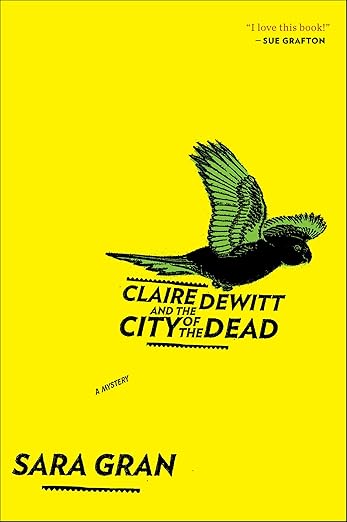
Gran’s highly unusual protagonist, the private eye Claire DeWitt, knows an awful lot. She is wise beyond her years and more daring than most of fiction’s male detectives, often to the point of being reckless. She is confident that no case will remain open under her watch, with the exception of the disappearance of her teenage best friend Tracy, a tragic theme that repeats within the DeWitt series of novels.
Also reiterated in the series is Claire’s history as apprentice to the late detective Constance Darling (they lived and worked together in New Orleans, a fact that prompted Claire to return there and take on a case). We are also treated, as in Gran’s other “Claire” novels, to excerpts and examples from French author Jaques Sillete’s counter-intuitive Zen-like book on the art of solving a crime.
Using his teaching points, Claire shows how she can find clues in unexpected ways. She has an uncanny ability to relate to the people of New Orleans, from the Garden District privileged to the deep-ward street level. She has a tough outlaw side of her own. Knowing what pain and bad luck can be, she is able to meet anyone down and out on equal grounds and interact via exchanges of frankness and respect. There’s some remarkable writing depicting these interactions. She has an edge in how to get information, a desirable trait for any private detective.
Her rapport is especially rare when she engages with some pistol-toting black youths with whom the ravages and injustices of hurricane Katrina are still fresh and raw. In the world of forty-ounce malt-liquor beers, uppers, lies, and violence, she seeks and manages to find accomplices and allies, not enemies.
More importantly, she has heart. Lots of it, and we feel it.


 williampelotmoore.com