Month: November 2024

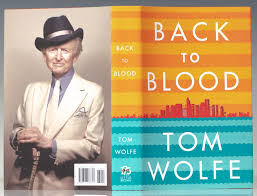
Tom Wolfe’s novel “Back to Blood”

wolfe author

I’ll give the author credit for opening the action with two issues that inflame the senses and test the sanity of every South Floridian: dealing with ethnic differences and finding a damn place to park.

Within its folds of fat, the book does contain some good writing and entertaining scenes, if only (ojalá que) Wolfe weren’t so repetitious, tedious and hell-bent on the obvious. Narrative takes a backseat to excess, and his snarky novelistic tune about Miami becomes a highly exaggerated and unlistenable rap.

If Wolfe or an editor had taken a scalpel to the manuscript and cut the hyperbole and tirades down to reasonable size, we might have been reading something special.

As is, I can’t get through it all. Not even close.

Tom Wolfe was certainly a fine writer, someone who dove in and lived what he wrote about. We owe a debt to him for his pioneering and producing some landmark works in Literary Journalism and American fiction with attitude. Like “Right Stuff” and “Bonfire of the Vanities.”

God knows what sort of real or imaginary head trip Wolfe was on during his research days and writing time in South Florida. Maybe “Return to Blood” was a statement to those other Florida biggie writers, saying, “Hey I can write crazier shit than you can.”

“The Secret History” by Donna Tartt

tartt

(review from 2014 with small add in 2024)

This is Tartt’s Vermont winter garden where characters are carefully developed and tended. In the early chapters the chaos of college grows like grass in the distance, not in the forefront (later that chaos will manifest like tall gnarly weeds).

Narrator Richard Papen chooses to escape from the crowd and joins a small elite group of rogue Classical Studies students, five of them, who are home-schooled (in a way) and students of the erudite and mysterious Professor Julian.  Julian’s advice is to not waste bookstore money on “Goodbye, Columbus.” When the faculty reviews Professor Julian by survey, student Henry says words to the effect, “How can they grade a deity?”

Are they outcasts or intellectual saints? Classic scholars or pretenders? Cold-blooded killers or repentant bunglers?

It’s a mix, from the obnoxious Bunny to the placid and caring Henry to the wholesome twins, and so forth. Richard himself seems the one most like a fish out of water.

The plot unfolds slowly, as Tartt takes us on excursions into the countryside and into bleak halls of hardwood floors, tables laden with whisky, unpatched roofs that allow snow, and grandiose old houses gone bohemian.  The mental excursions are ours via Richard.  Trepidation, doubt, mistrust, admiration, and in the case of the girl in the group an unfulfilled adoration. Some screwy happenings take place. A conspiracy is likely, and Richard is riding the fence in a dangerous position. While the story unravels artfully, Tartt (who was in college when she wrote this) makes a few missteps with contrived plot events, just a couple that seem too coincidental and mechanical.  Hard to find flaw, however.

Some chapters – like the one in which Richard spends semester break alone – are densely atmospheric and make for compelling reading.  Things slow down as Tartt describes each person in the group’s psychologically detailed experiences with the bad side of Bunny Corcoran. Bunny is one of the worst villains I’ve read. Then, toward the end of Part 1 and into Part 2, the story accelerates again and pulls us back in. There is little relenting (other than maybe an overly long stay at the Corcorans before the funeral) all the way to the end.

A terrific book, a novelist’s extravaganza of  technique and talent, in story movement and especially in characterization.  I appreciated this even more the second time around.